
The hospitality industry is heading into 2026 with one of the most complex talent environments it has ever faced. Turnover is unpredictable, the pipeline of ready managers is thin, and frontline performance varies widely from location to location. For brands that rely on consistent service and operational excellence, the stakes are high — talent strategy is no longer an HR conversation; it’s a core performance lever.
Across the industry, leaders are asking the same questions: How do we stabilize teams? How do we develop stronger managers? How do we build performance consistency across every location? The brands that are outpacing the rest aren’t waiting for the labor market to shift. They’re using data, predictive insights, and more precise hiring models to future-proof their teams against the volatility ahead.
Here’s how they’re preparing — and where most teams will need to evolve in 2026.
Tackling Turnover Volatility Before It Hits the Floor
Turnover volatility is a defining challenge for hospitality operators. The problem isn’t just the volume — it’s the unpredictability. Some new hires stay three years; others leave within weeks. The question is no longer how to stop turnover entirely but how to control its impact.
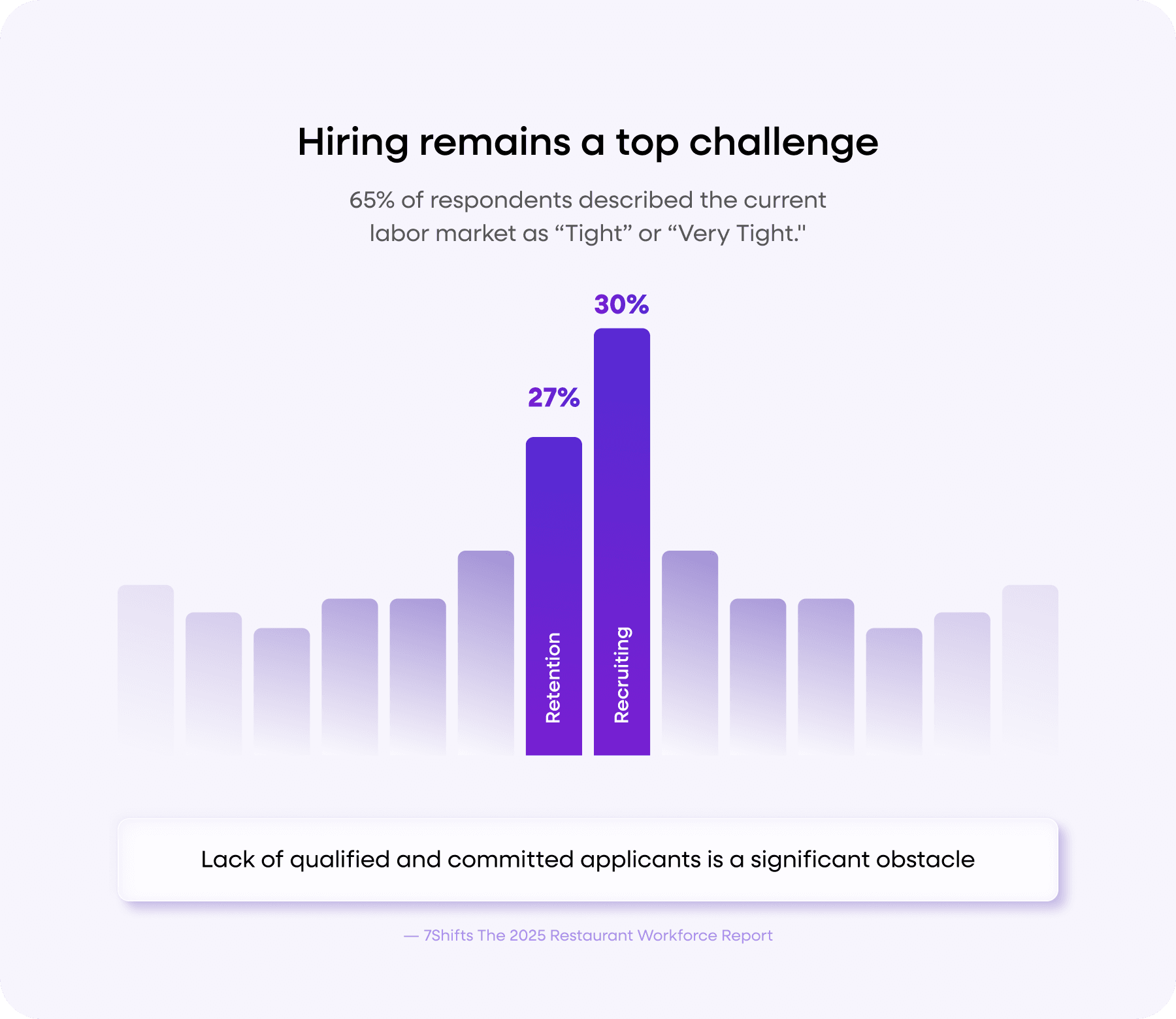
A recent 7shifts report highlights just how strained the labor market has become: 65% of operators say conditions are “tight” or “very tight,” and recruiting and retention remain their top two concerns. With fewer qualified candidates entering the pipeline, turnover volatility becomes even harder to manage.
Hiring for experience and characteristics
Experience matters, and so do the traits that actually predict success. The strongest operators look at both. They define the level and type of experience a role truly requires and evaluate candidates against the behaviors their top performers consistently demonstrate.
Sigma Squared makes this easier by comparing candidates to your actual high performers and pushing those insights directly into the tools teams already use. When integrated with an HRIS like ChartHop, promotion-readiness scores flow back into employee profiles so leaders can see who’s ready for the next role. And when connected to a salaried ATS like Greenhouse, hiring scores surface directly in the workflow to help teams identify the candidates most likely to succeed. Together, this gives operators a clearer, more objective view of who will stick, who will ramp quickly, and who is best aligned to the role.
Predicting early attrition risk & promotion opportunity
More operators are experimenting with models that combine candidate assessment data with early onboarding indicators. Sigma Squared, for example, uses these patterns to flag new hires who may need targeted support within the first 30–60 days, giving managers a chance to intervene early rather than react late.
The same intelligence can be used to identify promotion-ready talent. By comparing a team member’s traits and performance signals to those of successful leaders in the role, Sigma Squared highlights who is most likely to thrive in a promotion, and where additional development may be needed before making the move.
Building flexible staffing models
With clearer insight into who is likely to succeed and who may need additional support, leaders can staff more intentionally. They can balance shifts with a mix of high performers, developing team members, and newer hires who need more structure. This helps locations absorb turnover spikes, keep service levels steady, and avoid the constant scramble that comes from staffing blindly. It also allows managers to plan ahead instead of reacting shift to shift.
Closing Manager Readiness Gaps
Many managers step into leadership roles without the training or visibility they need. This leads to uneven coaching, unclear expectations, and inconsistent execution.
High-performing brands are fixing this by using clearer data to guide both development and promotion decisions. Sigma Squared helps executive teams see which employees are truly ready for a manager role by matching their skills and traits against those of past successful leaders. It also highlights where someone needs more training before making the jump, giving leaders time to coach proactively instead of reactively.
With better insight into who’s ready, and who needs support, brands promote more confidently, managers ramp faster, and retention improves across every level.
Reducing Performance Variance Across Locations
With multiple locations and different markets, in-store performance can swing dramatically depending on who’s scheduled or how strong a manager is. Operators working to tighten consistency across the floor are focused on three areas:
Defining success with data, not intuition
High-performing brands are moving toward role-specific success profiles that outline the traits, competencies, and behaviors required for each job. Sigma Squared's modeling helps brands identify these traits by analyzing their own top performers, ensuring hiring decisions align directly with operational outcomes.
Using predictive insights for promotions
Instead of promoting the most tenured employee or best individual contributor, some brands now assess internal candidates against the traits proven to drive strong leadership performance. This helps identify who is genuinely ready for the next role, and who may thrive better with additional development first.
Focusing on the inputs that drive outcomes
The best operators don’t wait for guest complaints or performance issues to signal trouble. They look at behavior-based indicators early (adaptability, consistency, communication style) to adjust training and coaching before performance dips.
See how Sigma Squared reduces performance variance across locations →
Building Teams That Can Withstand What’s Ahead
The challenges of 2026 won’t be solved by hiring faster or training harder. The operators preparing most effectively are rethinking how they make talent decisions altogether.
They’re using data to hire people who fit the demands of the role, giving managers better insight into their teams, and promoting based on proven success patterns rather than guesswork. Tools like Sigma Squared, integrated into existing HRIS and ATS platforms, make these decisions clearer and more consistent — without adding friction to day-to-day operations.
The Bottom Line for 2026
The talent environment is tough, but the path forward is becoming clearer. The brands that will win in 2026 are those that bring more precision to hiring, give managers better support, and build systems that make performance more predictable.